Think an A-Frame Home Is a Budget-Friendly Dream? Not So Fast.
You start scrolling Pinterest.
You see that iconic triangle silhouette. Floor-to-ceiling windows. Cozy wood interiors. Snow sliding perfectly off the roof.
Then you ask the real question:
How much does it cost to build an A-frame home?
And suddenly… the numbers don’t look so minimal anymore.
Many homeowners assume an A-frame building cost is automatically cheaper than a traditional home. But depending on size, materials, and customization, the final price can surprise you in both directions.
Let’s break it down:
How Much Does It Cost to Build an A‑Frame Home?
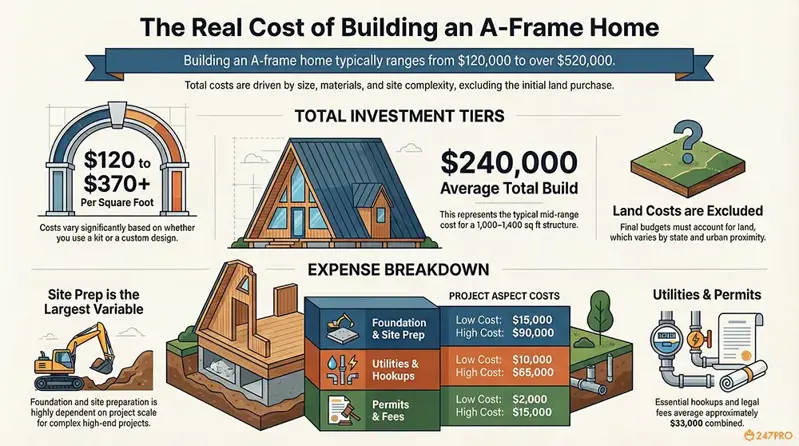
Building an A‑Frame house can cost anywhere from roughly $100,000 to over $500,000 depending on size, location, materials, finishes, and whether you use a kit or built‑from‑scratch design.
Estimated Cost Ranges
| Project Aspect | Low | Average | High |
| Total build cost (1,000–1,400 sq ft) | $120,000 | $240,000 | $520,000+ |
| Cost per square foot | $120 | $190 | $370+ |
| Foundation & site prep | $15,000 | $40,000 | $90,000 |
| Utilities & hookups | $10,000 | $25,000 | $65,000 |
| Permits & fees | $2,000 | $8,000 | $15,000 |
Note: These figures exclude land purchase costs, which vary widely across states ,urban land may cost tens of thousands more than rural or undeveloped tracts.
Cost to Build A-Frame Home per Square Foot
A core measure for home builders is price per square foot, and for A‑Frame homes:
| Size (sq ft) | Typical Build Cost |
| 300 sq ft | $30,000 – $90,000 |
| 600 sq ft | $60,000 – $180,000 |
| 800 sq ft | $80,000 – $240,000 |
| 1,000 sq ft | $100,000 – $300,000 |
| 1,500 sq ft | $150,000 – $450,000 |
| 2,000 sq ft | $200,000 – $600,000 |
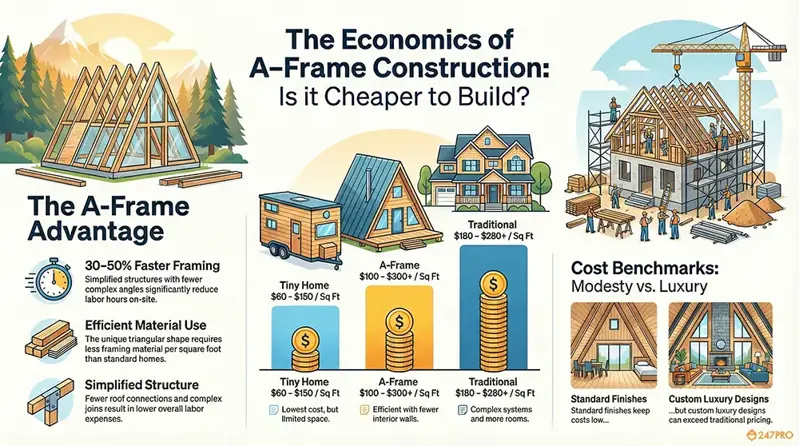
On average, A‑Frame homes cost $100–$300 per square foot similar to typical U.S. residential builds though simplicity of design and material choice can skew totals up or down.
Is It Cheaper to Build an A‑Frame House?
Short answer: usually yes ,especially in smaller sizes or if you use prefab kits.
Cost Savings
- Simplified Structure: A‑Frame homes have fewer complex angles and roof connections than traditional homes, reducing labor hours.
- Efficient Material Use: The triangular shape often requires less framing material per square foot.
- Speed of Construction: Less time on the build site means lower labor expense ,often 30–50% faster framing than traditional builds.
Cost Comparison: A‑Frame vs Traditional
To better understand how an A‑Frame home stacks up against traditional houses in terms of costs, the table below shows the approximate price per square foot for each type:
| Home Type | Typical $/sq ft | Notes |
| A‑Frame | $100–$300+ | Efficient, fewer interior walls |
| Traditional | ~$180–$280+ | More complex systems/per room |
| Tiny Home* | ~$60–$150* | Even cheaper but less space |
Tiny homes have unique zoning and utility costs ,they may reduce total costs significantly for small-scale builds.
Conclusion: A‑Frame houses can be cheaper than traditional styles;especially if you keep square footage modest and opt for standard finishes ,but custom luxury designs can exceed typical traditional home costs.
How Much to Build a 1,000 sq ft A‑Frame House?
To give you a clear picture of where your money goes when building a 1,000 sq ft A‑Frame home, the table below breaks down the estimated costs by major construction components. This helps you plan your budget more accurately and understand which areas are the most expensive.Using construction proposal software can help organize all estimates and track expenses efficiently.
| Cost Component | Estimated Range |
| Foundation & prep | $15,000 – $40,000 |
| Shell & framing | $40,000 – $90,000 |
| Insulation & finishing | $30,000 – $70,000 |
| Utilities (plumbing, HVAC, electrical) | $20,000 – $65,000 |
| Permits & contingencies | $5,000 – $15,000 |
Estimated Total: ~$120,000 – $300,000+ for a typical 1,000 sq ft build.
This assumes standard mid‑quality materials and professional labor. Using a prefab kit can reduce some costs, but expect to pay for site prep, utilities, permits, and finishes in addition to the kit price.
A‑Frame House Cost vs Traditional Homes
In many U.S. markets, conventional homes average around $150–$250 per square foot for built‑from‑scratch construction.
Compare that to A‑Frame builds:
- A‑Frame: ~$100–$300+ per sq ft (wide range due to design choices)
- Traditional: ~$180–$280 per sq ft average
If you leverage prefab kits or efficient materials, you can often save thousands, especially on labor and complex framing, while partnering with reputable construction project management firms ensures accurate budgeting and smooth execution. However, if you choose high‑end finishes, luxury windows, or custom architecture, your A‑Frame can easily rival or exceed traditional home costs.
Advantages of Building an A‑Frame House
Building an A‑Frame home comes with several unique benefits that go beyond cost savings. The following points highlight the main advantages you can expect, from construction simplicity to energy efficiency and design appeal:
- Simpler Construction: Fewer complicated framing steps and often faster build times.
- Iconic Design Appeal: Large windows and vaulted ceilings offer natural light, modern aesthetics, and an open feel.
- Efficient Heating & Cooling (in certain climates): Compact interiors with high ceilings can be easier to heat or cool with modern systems.
- Works Well with Prefab Kits: DIY or kit options exist, reducing labor costs and planning hurdles.
Disadvantages of an A‑Frame House
While A‑Frame homes have many benefits, it’s important to be aware of their potential drawbacks. The following points cover the main challenges you may face when building or living in an A‑Frame home:
- Less Usable Space: the sloped walls reduce vertical wall space, making storage and interior layout planning more challenging.
- Higher Roof Surface Area: More exterior surface can lead to higher energy costs if insulation isn’t optimized.
- Steep Roof Maintenance: Repairing and cleaning the roof can be trickier due to the steep angles.
- Not Always the Cheapest: Custom features, large glass walls, and complex foundations can send total costs above traditional homes.
Expert Tips to Control Your Build Costs
Managing construction costs can be tricky, especially with A‑Frame homes where design choices and materials can greatly impact your budget. The following expert tips highlight key strategies to keep your project on track and avoid unexpected expenses:
1.Plan with Precision
Use construction proposal software to estimate costs, manage bids, and organize materials early.
2.Hire Smart
Work with reputable construction project management firms to reduce costly mistakes and keep timelines tight.
3. Don’t Ignore Landscaping
Factoring landscaping prices early ensures permit smoothness and outdoor utility access.
4.Compare Options
Check prefab kits vs stick build costs and estimate total project spend before choosing, especially if considering the cost to build a tiny home as an alternative.
5.Add Flexibility
Budget for unexpected expenses and consider construction temp services if you need additional labor support during peak build phases.
Final Thought
Building an A‑Frame home in 2026 can be an exciting, cost‑effective way to create a unique living space ,but like any major construction project, realistic budgeting, data‑driven planning, and expert guidance are essential.
With the right tools, accurate cost estimates, and smart decisions early on, your A‑Frame build can be both beautiful and financially sound.
FAQ
What hidden costs should I expect when building an A‑Frame home?
Hidden costs can include custom design fees, specialty windows, roofing for steep angles, site grading, and unexpected permit fees. Budgeting an extra 10–15% for surprises is wise.
How does location affect the overall cost of an A‑Frame build?
Land prices, labor rates, and local building codes vary widely across regions. Urban or high-demand areas may increase costs significantly, while rural areas are usually cheaper.
Are there specific insulation or energy-efficiency challenges unique to A‑Frame homes?
Yes, the sloped walls and high ceilings can make heating and cooling less efficient. Proper insulation and energy-efficient windows are essential to avoid high utility bills.
How flexible is an A‑Frame design for future expansions or remodels?
Expanding an A‑Frame can be more challenging than a traditional home due to its triangular structure. Modular or prefab kits offer more flexibility for future adjustments.
What financing or mortgage considerations are unique for A‑Frame homes?
Some lenders may treat non-traditional homes differently. Make sure your mortgage provider accepts unconventional designs and check if any special appraisals are needed.
Can an A‑Frame home be built year-round, or is construction season-dependent?
Weather conditions can affect construction timelines, especially in snowy or rainy areas. Planning for seasonal delays helps keep your project on track.
What maintenance or long-term costs should I budget for that might not be obvious upfront?
Consider roof maintenance for steep slopes, large window cleaning, periodic wood treatment, and potential foundation or drainage adjustments.