You start pricing out a fence, thinking it’ll cost a few thousand dollars.
Then the quotes come in.
One contractor says $4,200.
Another says $6,800.
Your neighbor paid $3,000 last year.
Now you’re wondering:
How much does it cost to build a fence?
The truth is, fence pricing depends on material, labor rates, location, height, and site conditions. And in high-cost states like California, prices can swing fast.
This guide breaks down real U.S. cost data for:
- Cost to build a fence
- Cost of building a fence by material
- Cost to build a wood fence
- How much does it cost to build a privacy fence
- metal fence pricing
- DIY vs hiring a pro
- labor cost calculation
- Cost to build a fence in California
Let’s break it down.
How Much Does It Cost to Build a Fence in the U.S.?
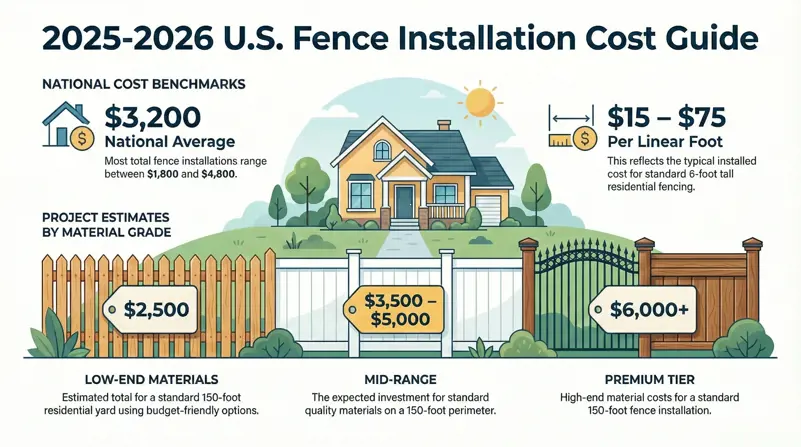
National averages (2025–2026 data):
| Category | Average Cost |
| Total fence installation | $1,800 – $4,800 |
| National average | ~$3,200 |
| Cost per linear foot (installed) | $15 – $75 |
Most residential fences are 6 feet tall and 100–200 linear feet long.
For a standard 150-foot yard:
- Low-end materials: ~$2,500
- Mid-range materials: ~$3,500–$5,000
- Premium materials: $6,000+
Fence Installation Costs by Material
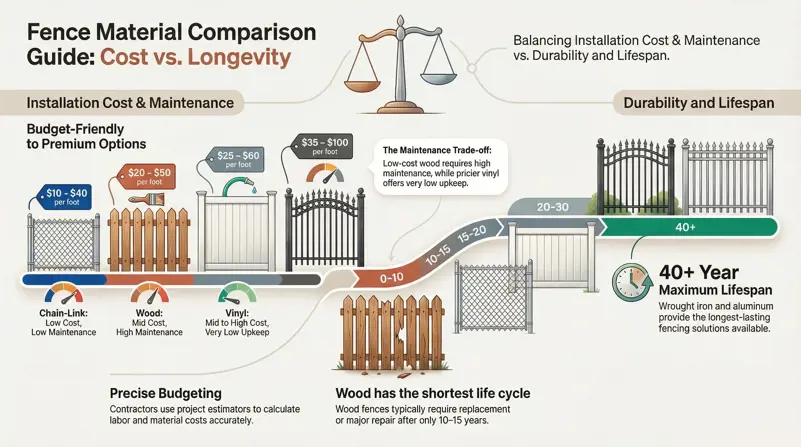
Before we break down the costs per material, it’s helpful to know that each type of fence comes with its own advantages, maintenance requirements, and lifespan.Choosing wisely now can save thousands over the years, as the cost landscape across different states significantly affects material and labor prices.
| Material | Cost Per Linear Foot (Installed) | Lifespan | Maintenance |
| Wood | $20 – $50 | 10–15 yrs | High |
| Vinyl | $25 – $60 | 20–30 yrs | Very Low |
| Chain-Link | $10 – $40 | 15–20 yrs | Low |
| Aluminum | $30 – $80 | 30+ yrs | Low |
| Wrought Iron | $35 – $100 | 40+ yrs | Medium |
To make precise budgeting easier, many contractors use a remodeling project estimator to calculate both material and labor costs. This ensures that each project stays profitable without surprises.
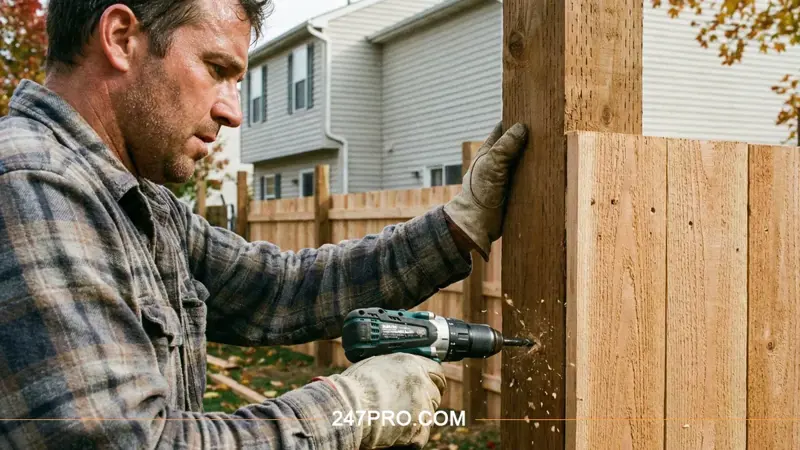
How Much Does It Cost to Build a Wood Fence?
Wood remains America’s most popular fence type, especially for privacy.
Cost to build wood fence:
- Pressure-treated pine: $20–$30 per ft
- Cedar: $25–$45 per ft
- Redwood: $30–$50 per ft
Example:
150 linear feet × $30 per ft = $4500
Why wood costs less upfront:
- Materials are cheaper
- Widely available
- Easier to install
But long-term:
- Staining every 2–3 years
- Warping & rot risk
- Replacement boards over time
Professional contractors often complement this with construction invoice software to keep track of labor costs, materials, and project billing efficiently.
How Much Does It Cost to Build a Privacy Fence?
Privacy fences are typically 6–8 feet tall.
| Material | Cost Per Foot |
| Wood privacy | $25 – $55 |
| Vinyl privacy | $30 – $65 |
A 6-foot privacy fence around a medium yard (180 linear ft):
$4,500 – $9,000 depending on material and region.
Height increases cost significantly due to:
- More material
- Deeper post setting
- Additional labor
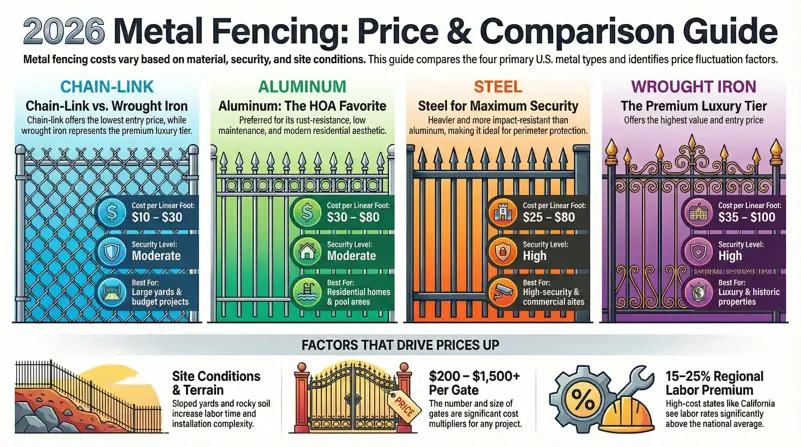
How Much Does It Cost to Put a Metal Fence?
If you're considering a metal fence, you're probably wondering why quotes vary so much.
One contractor says $3,500.
Another says $9,000.
The reason? Not all metal fences are the same.
The type of metal, thickness, coating, height, terrain conditions, and labor rates all significantly impact the final cost.
Here’s what U.S. homeowners can expect in 2026:
| Metal Fence Type | Installed Cost per Linear Foot | Best For | Security Level | Maintenance |
| Chain-Link | $10 – $30 | Large yards, budget installs | Moderate | Low |
| Aluminum | $30 – $80 | Residential homes, HOA areas | Moderate | Very Low |
| Steel | $25 – $80 | High security | High | Low |
| Wrought Iron | $35 – $100 | Luxury homes | High | Medium |
Let’s break down each option.
1. Chain-Link Fence
Most affordable metal fencing option in the U.S.
Cost: $10 – $30 per linear foot installed
150 linear feet: $1,500 – $4,500
What affects the price?
- Wire gauge (thicker = more expensive)
- Galvanized vs PVC-coated
- Fence height (4 ft, 6 ft, 8 ft)
- Privacy slats or barbed wire additions
- Number of gates
Pros:
- Lowest upfront cost
- Fast installation
- Ideal for large properties
Cons:
- Industrial appearance
- Minimal privacy
Best for: backyards, rental properties, sports fields, and commercial spaces.
2. Aluminum Fence
A popular residential option, especially in neighborhoods with HOA guidelines.
Cost: $30 – $80 per linear foot
150 ft project: $4,500 – $12,000
What increases cost?
- Decorative scrollwork
- Powder-coated finishes
- Taller heights (over 6 ft)
- Custom gates
- Sloped yard adjustments
Pros:
- Rust-resistant
- Very low maintenance
- Clean, modern look
- Lightweight but durable
Cons:
- Less impact-resistant than steel
- Higher upfront cost than wood
Best for: front yards, pool enclosures, suburban homes.
3. Steel Fence
Heavier and stronger than aluminum.
Cost: $25 – $80 per linear foot
150 ft: $3,750 – $12,000
Price factors:
- Steel thickness
- Galvanized coating
- Powder coating quality
- Post depth and concrete work
- Security add-ons
Pros:
- High security
- Stronger impact resistance
- Long lifespan
Cons:
- Heavier installation
- Can rust without proper coating
Best for: perimeter security, commercial properties, high-security homes.
4. Wrought Iron Fence
Premium, decorative, and long-lasting.
Cost: $35 – $100 per linear foot
150 ft: $5,250 – $15,000
Why it's expensive:
- Hand-crafted detailing
- Heavy material
- Multi-layer protective coatings
- Labor-intensive installation
Pros:
- Classic, high-end aesthetic
- Increases property value
- Extremely durable
Cons:
- Higher initial investment
- Periodic repainting required
Best for: luxury homes, historic properties, gated entrances.
What Increases the Cost of a Metal Fence?
Even after choosing your material, these factors can raise your final price:
- Fence height above 6 ft
- Sloped or uneven terrain
- Rocky soil (increases digging time)
- Number and size of gates ($200 – $1,500+ each)
- Custom design elements
- Permit fees
- Regional labor rates
In states like California, labor costs alone can run 15–25% above the national average.
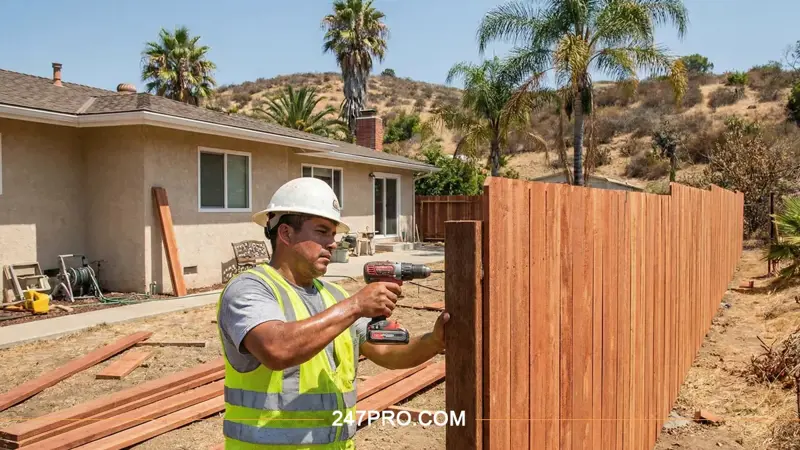
Cost to Build a Fence in California
California labor costs are significantly higher than national averages.
| Material | CA Installed Cost per ft |
| Wood | $24 – $47 |
| Vinyl | $30 – $65 |
| Metal | $35 – $110 |
Reasons for higher CA costs:
- Higher contractor wages
- Stricter permit requirements
- Soil conditions in some regions
- Higher material transportation costs
In cities like Los Angeles or San Diego, expect 10–20% above state averages.
Is It Cheaper to Build Your Own Fence?
DIY removes labor costs, but adds risk.
| Expense | DIY | Professional |
| Materials | Same | Same |
| Labor | $0 | $5–$15 per ft |
| Tools | $100–$400 rental | Included |
| Time investment | High | Low |
| Mistake risk | High | Low |
DIY makes sense if:
- The yard is flat
- You have construction experience
- No complex permits required
Even professional contractors often use a remodeling CRM to organize client projects, track materials, and schedule fence installations efficiently. If not, professional installation may save money long term.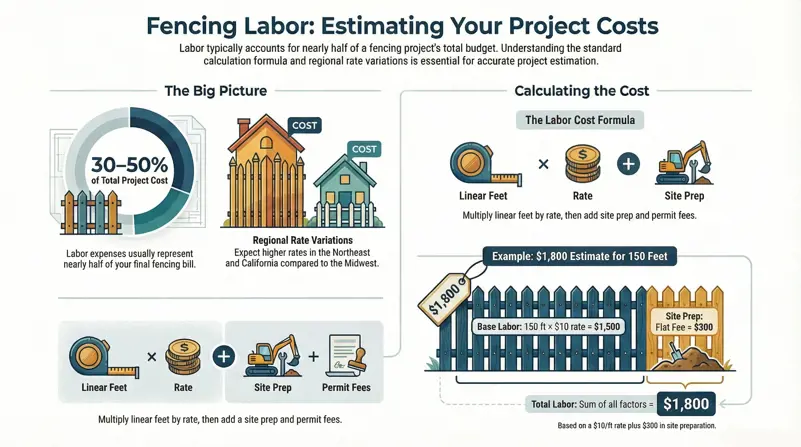
How Do You Calculate Labor Cost for Fencing?
Labor usually makes up 30–50% of total project cost.
Simple Formula:
Labor Cost =
(Linear Feet × Labor Rate per ft) + Site Prep + Permits
Example:
150 ft × $10 labor rate = $1,500
- $300 site prep
- = $1,800 total labor
Labor rates vary by region:
- Midwest: Lower
- Northeast & California: Higher
What Impacts the Cost of Building a Fence?
Besides material, consider:
- Terrain slope
- Soil type (rocky soil increases digging time)
- Gates (each gate adds $200–$1,000+)
- Height above 6 ft
- Decorative upgrades
- Permit fees
Hidden costs often surprise homeowners who only budget for materials.
Final Takeaways
If your priority is:
Lowest upfront cost: Wood or Chain-Link
Low maintenance: Vinyl
Long-term durability & security: Metal
Luxury appearance: Wrought Iron
National average fence project: ~$3,200
California average: Higher than national by 10–25%
Before building, always:
- Measure linear footage carefully
- Get 2–3 contractor quotes
- Confirm permit requirements
- Compare long-term maintenance costs
FAQ
What permits do I need before building a fence?
Many homeowners don’t realize that some cities or states require permits even for basic fences. This question helps plan for extra costs and time.
How do I choose the right fence height and style for my yard?
People want to know what height and style are best for privacy, security, or curb appeal, and how it affects overall cost.
What are the most durable materials for extreme weather conditions?
Readers want to know which materials hold up best in heat, cold, humidity, or storms.
How long does it take to install a fence?
Many homeowners want an estimated installation timeframe to plan their project, something not explicitly mentioned in your content.
Can I reuse materials from an old fence to save money?
A practical question for those looking to DIY or cut costs.
What ongoing maintenance tasks are required for each type of fence?
While your content touches on maintenance, a clear breakdown of annual or seasonal care for each material adds value.
How can I avoid common mistakes when building or hiring a fence contractor?
Readers want to know which mistakes can increase costs or damage the fence, like choosing the wrong material, an unreliable contractor, or poor installation.