Picture a cozy Christmas evening by the fireplace in the house of your dreams. Building a house that is designed, planned, and built on your own is truly an incredible journey. One thing that always comes in the way of dreams becoming true is not knowing how much you need to spend on the project. You may have wondered how to estimate the cost of building a house.
Since you are here, it means that you are already looking for ways to "estimate" the cost of building your house, and you have a basic grasp of it. You may be wondering, can you build a house room by room? The answer is yes, and in fact, this is one of the most effective ways to control your budget and manage construction efficiently. Now, we will dive deeper and provide you with a thorough understanding of the residential building estimate process and the tools to help you manage your project and set a realistic budget. By the end, you'll have a solid grasp of how to use a home building estimator all by yourself.
Introduction to Home Construction Estimation
Most people underestimate the complexity of estimating costs and think it is simply a matter of math, but it is far more than that. You need a detailed map, a schedule, and, more importantly, a detailed budget. Without a detailed financial roadmap, you can face obstacles and delays with your project. Imagine if the cost of building a house is $300,000; even a simple 5% error can result in a $15,000 shortfall. Therefore, precise estimation is not just a helpful step; it is essential for any project.
Accurate cost estimation can help you with the following:
- Setting realistic expectations
- Making wise decisions
- Ensuring feasibility
- Preventing cost overruns
- Communicating clearly with contractors
Understanding the "Cost to Build a House"
When people want to learn how to estimate the cost of building a house, the first thing that comes to mind is the cost of materials. This is an educated guess, as the material typically accounts for 40% of the total budget. Although they are crucial components, they are only a piece of a larger financial puzzle. Let's break down the key elements of the building to help us with a total residential building estimate project
| Cost Category | Details and Description |
| 1. Land Acquisition Cost | The primary cost of purchasing a suitable plot of land for construction (if not already owned). |
| 2. Design and Engineering | Fees paid to architects, structural engineers, surveyors, and designers for creating the plans. |
| 3. Permits and Fees | Necessary expenses for obtaining the building permit and other local authorizations from the municipality/local authorities. |
| 4. Site Preparation and Foundation | Land clearing, excavation, grading, and installation of the appropriate foundation. |
| 5. Building Materials | Includes all required materials: structure (steel, cement, lumber), plumbing pipes, electrical wiring, doors, windows, paint, flooring, etc. |
| 6. Labor (Wages) | Wages for all specialized and general workers: carpenters, plumbers, electricians, masons, painters, etc. |
| 7. Utilities Connections | Costs associated with connecting the property to essential services like water, sewage, gas, and electricity. |
| 8. Insurance | Costs for builder's risk insurance and liability insurance during the construction period. |
| 9. Fixed Appliances and Interior Fixtures | Costs related to custom cabinetry, built-in closets, and major household appliances (refrigerator, oven, etc.). |
| 10. Landscaping and Exterior Work | Costs for paving, hardscaping, green spaces, planting trees, and building retaining walls around the property. |
| 11. Financing Costs | Fees and interest charged by banks related to the construction loans or facilities you have obtained. |
| 12. Construction Taxes | Local taxes or value-added taxes (VAT) that may apply during the construction process. |
| 13. Contingency Fund (Unexpected Expenses) | A reserve budget (usually 10% of the total budget) for managing crises and unforeseen costs. |
Now, let's say that building a 1,000-square-foot building in San Francisco costs approximately $500,000. Let's then divide the cost of each component.
| Item | Cost Category | Approximate % of Total Budget | Estimated Cost (USD) |
| 1 | Design and Engineering | 6% | $30,000 |
| 2 | Permits, Fees, and Construction Taxes | 7% | $35,000 |
| 3 | Site Preparation and Foundation | 9% | $45,000 |
| 4 | Building Materials (Hard Costs) | 33% | $165,000 |
| 5 | Labor (Contractor and Worker Wages) | 27% | $135,000 |
| 6 | Utilities Connections (Water, Power, Gas, Sewer) | 1% | $5,000 |
| 7 | Insurance (During Construction Period) | 1% | $5,000 |
| 8 | Fixed Appliances and Interior Fixtures (Cabinetry, hardware) | 3% | $15,000 |
| 9 | Landscaping and Exterior Work | 2% | $10,000 |
| 10 | Financing Costs (Loan Interest) | 1% | $5,000 |
| 11 | Contingency Fund (Unexpected Expenses) | 10% | $50,000 |
| Grand Total | 100% | $500,000 |
The Room-by-Room Estimation Approach
Trying to estimate the whole building can be overwhelming. Therefore, use a room-by-room estimation approach that breaks down the overall project into smaller, more manageable units. This method gives you:
- More accurate budgeting: By focusing on the smaller units, you can see exactly where your money is going, and you are less likely to miss any costs
- Easier design customization: smaller units will have more detailed designs; in this method, you will know exactly what you need for your design.
- Easier Tracking: It's simpler to track the actual cost of a small part of your house, like a kitchen, than the whole house
- Spotting cost drivers: you can identify the parts of the house that are trickier and cost more; this will allow you to prioritize the process.
Let's take the kitchen, living room, and garage as examples and estimate the cost of each by breaking it down.
Estimating the cost for a mid-sized kitchen remodel
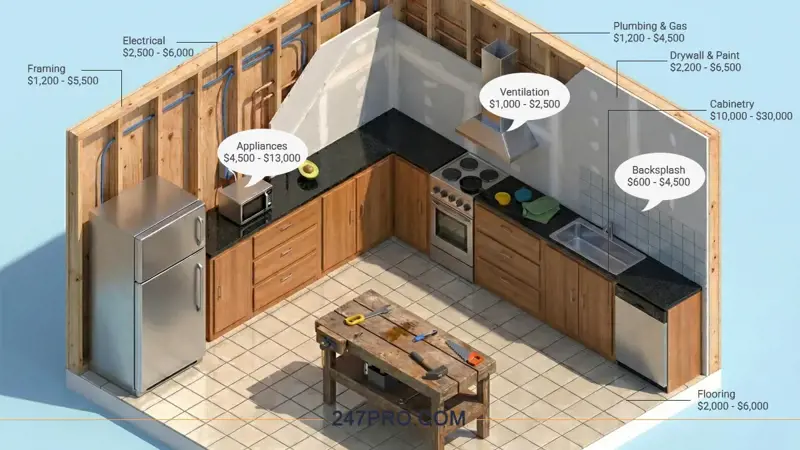
To better understand the costs of a mid-sized kitchen remodel, the table below shows the approximate cost range for each component:
| Component | Updated Estimated Cost Range (100-200 sq ft) |
| Framing | $1,200 - $5,500 |
| Electrical | $2,500 - $6,000 |
| Plumbing & Gas | $1,200 - $4,500 |
| Drywall & Paint | $2,200 - $6,500 |
| Flooring | $2,000 - $6,000 |
| Cabinetry | $10,000 - $30,000 |
| Countertops | $3,000 - $12,000 |
| Appliances | $4,500 - $13,000 |
| Backsplash | $600 - $4,500 |
| Ventilation | $1,000 - $2,500 |
| Total Estimated Cost | $28,200 - $110,000 |
The kitchen is often called the heart of the home. Building or remodeling a kitchen requires careful planning because it combines functionality, style, and budget considerations. Costs depend on size, materials, and the complexity of design.This table provides an estimated cost breakdown for finishing a mid-sized (150 sq ft) kitchen as part of a new home construction. The costs here focus on internal components and finishes, as the building's main structure (foundation, walls, roof) is covered in the overall home budget.
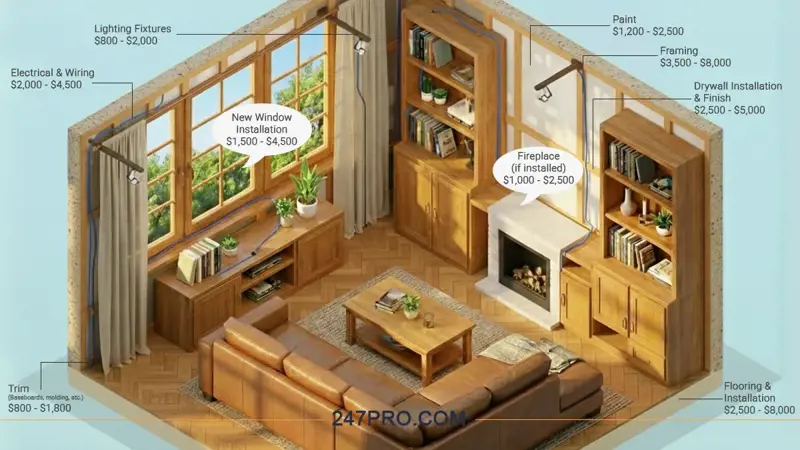
Estimating the cost of building a living room
To give you a clear idea of the costs involved in building a mid-sized living room, the table below outlines the estimated cost range for each component:
| Component | Updated Estimated Cost Range (mid-size 300 sq ft room) |
| Foundation | $4,500 - $9,000 |
| Framing | $3,500 - $8,000 |
| Drywall Installation & Finish | $2,500 - $5,000 |
| Paint | $1,200 - $2,500 |
| Flooring & Installation | $2,500 - $8,000 |
| Electrical & Wiring | $2,000 - $4,500 |
| Lighting Fixtures | $800 - $2,000 |
| Trim (Baseboards, molding, etc.) | $800 - $1,800 |
| New Window Installation | $1,500 - $4,500 |
| Fireplace (if installed) | $3,500 - $12,000 |
| Total Estimated Cost (Excludes Permits/Contingency) | $27,800 - $65,300 |
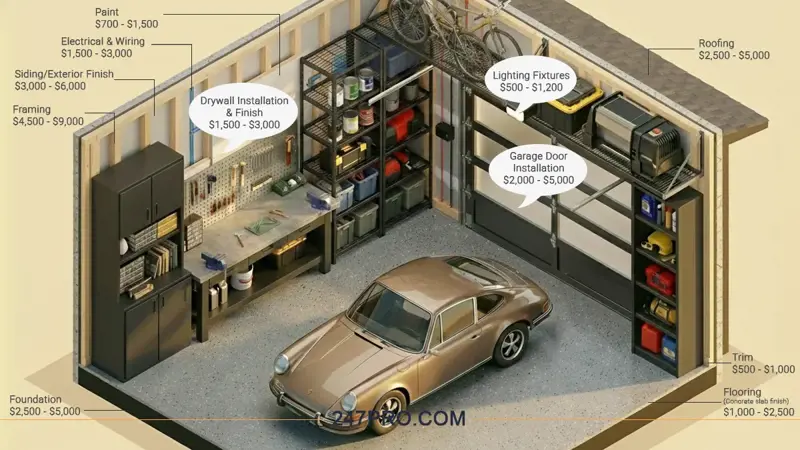
Estimating the cost of building a garage
To help you understand the costs involved in building a mid-sized two-car garage, the table below provides the estimated cost range for each component:
| Component | Updated Estimated Cost Range (mid-size 400 sq ft 2-car garage) |
| Foundation | $2,500 - $5,000 |
| Framing | $4,500 - $9,000 |
| Drywall Installation & Finish | $1,500 - $3,000 |
| Paint | $700 - $1,500 |
| Flooring (Concrete slab finish) | $1,000 - $2,500 |
| Electrical & Wiring | $1,500 - $3,000 |
| Lighting Fixtures | $500 - $1,200 |
| Trim (Baseboards, molding, etc.) | $500 - $1,000 |
| Garage Door Installation (Door & Opener) | $2,000 - $5,000 |
| Windows | $800 - $2,200 |
| Roofing | $2,500 - $5,000 |
| Siding/Exterior Finish (Matching house) | $3,000 - $6,000 |
| Total Estimated Component Cost | $25,000 - $45,900 |
Do the same process for bedrooms, bathrooms, living areas, garage, and other rooms of your home. This way, you can have a detailed and manageable budget and learn how to estimate the cost of building a house as multiple small units.
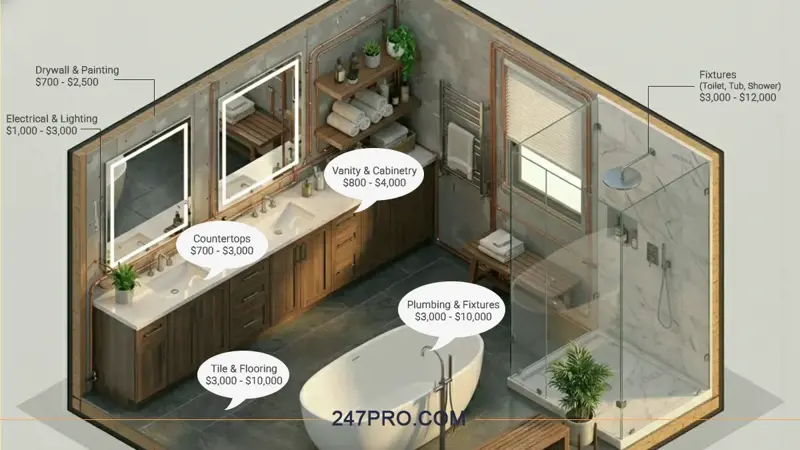
Estimating the cost to build a bathroom
A bathroom is one of the most essential rooms in a home, and its cost can vary depending on size, materials, and fixtures. Here's an approximate breakdown for a mid-sized 40-80 sq ft bathroom in the U.S:
| Component | Estimated Cost Range (40–80 sq ft) | Notes |
| Plumbing & Fixtures | $3,000 - $10,000 | Includes pipes, rough-in plumbing, and water/gas connections. |
| Labor | $3,000 - $10,000 | Wages for installers, electricians, plumbers, masons, and painters. |
| Tile & Flooring | $3,000 - $10,000 | Cost of tile and installation for floors, walls, and showers. |
| Fixtures (Toilet, Tub, Shower) | $3,000 - $12,000 | Toilet, tub or shower, and sink. |
| Vanity & Cabinetry | $800 - $4,000 | From stock to semi-custom vanities. |
| Countertops | $700 - $3,000 | Vanity surfaces (laminate, granite, or quartz). |
| Electrical & Lighting | $1,000 - $3,000 | Wiring, lighting fixtures, and ventilation. |
| Drywall & Painting | $700 - $2,500 | Wall preparation and finishing paint. |
| Total Estimated Cost (Excludes Contingency) | $15,200 - $54,500 |
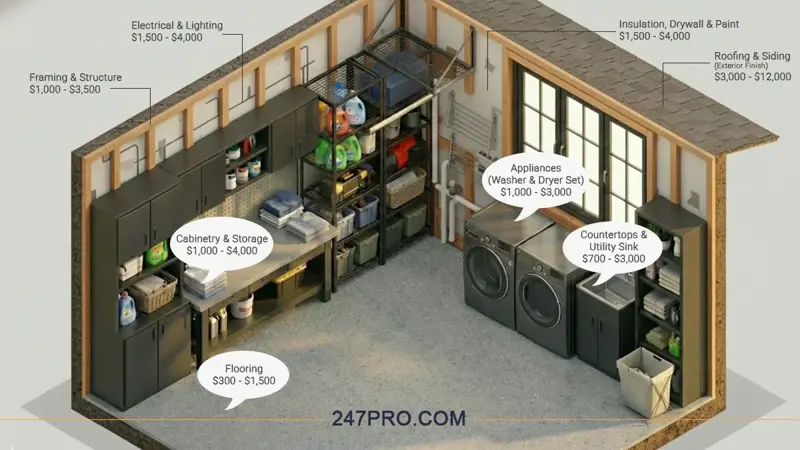
Estimating the landry room construction cost
To give you a clear picture of the costs involved in constructing a mid-sized laundry room, the table below outlines the estimated cost range for each component:
| Component | Estimated Cost Range (mid-size 60 sq ft room) | Notes |
| Permits & Design Fees | $700 - $3,000 | Varies by local authority |
| Foundation & Site Prep | $1,500 - $4,500 | |
| Framing & Structure | $1,000 - $3,500 | |
| Roofing & Siding (Exterior Finish) | $1,500 - $4,500 | |
| Plumbing & Gas Hookups | $2,000 - $6,000 | Critical for water supply, drain lines, and gas |
| Electrical & Lighting | 220V outlet needed for dryer | |
| Insulation, Drywall & Paint | $1,500 - $4,000 | |
| Flooring (Moisture-resistant) | $300 - $1,500 | Vinyl or tile are common choices |
| Cabinetry & Storage | $1,000 - $4,000 | |
| Countertops & Utility Sink | $700 - $3,000 | Utility sinks cost $330-$1,350 installed |
| Appliances (Washer & Dryer Set) | $1,000 - $3,000 | Basic to mid-range models |
| Total Estimated Component Cost | $13,700 - $47,000 |
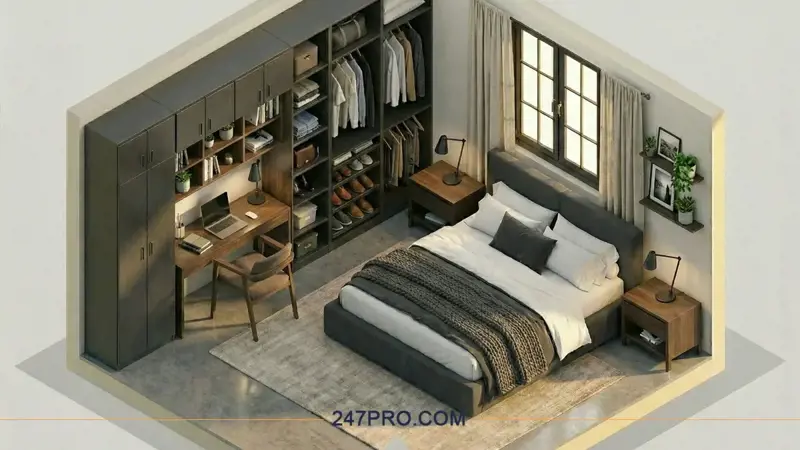
Cost to Build a Bedroom House
Building a bedroom may seem simple, but the cost depends on the size, materials, and finishing level you choose. Bedrooms are essential spaces in any home, and planning them carefully helps you manage your budget effectively.These costs are national averages and do not include the cost of purchasing the land:
| House Size | Approximate Square Footage | Average Total Cost Range (USD) |
| 1-Bedroom House | 700 - 1,000 sq ft | $105,000 - $275,000 |
| 2-Bedroom House | 1,000 - 1,500 sq ft | $150,000 - $412,500 |
| 3-Bedroom House | 1,600 - 2,400 sq ft | $240,000 - $660,000 |
| 4-Bedroom House | 2,400 - 3,500 sq ft | $360,000 - $962,500 |
Key Factors Influencing Overall Home Cost
Earlier, I wrote an example that building a 1,000-square-foot building in San Francisco would cost $500,000. But this was just an average cost; no two houses, even with similar components, would cost the same. Several factors can influence the final price of building a home. Here, we mention a few of them.
- Size (Square Footage): This is the most crystal-clear factor. A larger place will require more materials, labor, and time, all of which lead to higher costs.
- Location: The geographical location of your place can dramatically impact labor costs, material transportation, and local permit fees.
- Complexity of Design: A simple house with average materials is cost-effective compared to customized and more complex designs.
Always start by identifying these factors and consider them when setting a budget.
The Importance of Professional Help
Understanding how to estimate the cost of building a house is an essential part of managing your project financially; however, that doesn't mean you no longer need professional help with your project. Professionals, such as architects and various contractors, can assist you with any questions or problems you may encounter.For larger and more complex builds, an estimator can help you with financial planning, and platforms like Pro Finder can connect you with qualified professionals.
For larger and more complex builds, an estimator can help you with financial planning. However, combining your knowledge with expert guidance ensures that your dream home is built efficiently and within budget.
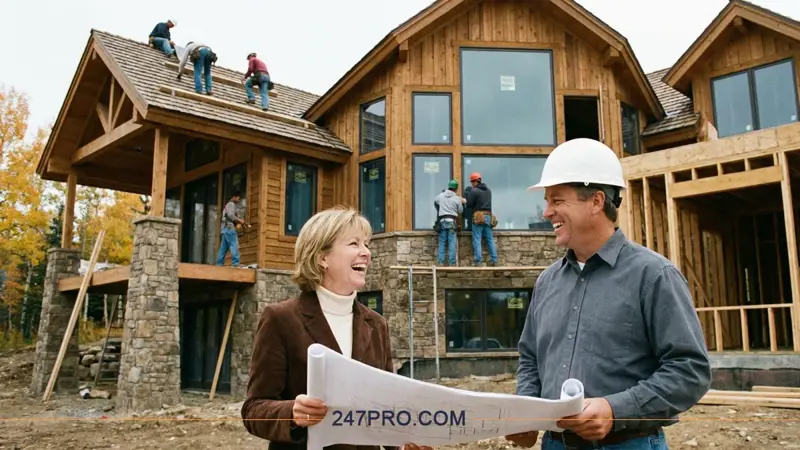
How to Build a House Room by Room on a Budget?
To build your home gradually and stay within budget, follow these simple steps:
- Prioritize essential rooms first: Start with the kitchen, bathroom, and primary bedroom.
- Use a simple, expandable floor plan: Design the house so future rooms can be added easily.
- Split your budget by room: Assign a separate budget to each room to control spending.
- Start with core infrastructure: Build the foundation, plumbing, and electrical systems with future expansion in mind.
- Build in phases based on available funds: Complete one room at a time as your budget allows.
- Set aside a contingency budget: Keep 10–15% of your total budget for unexpected expenses.
This step-by-step approach helps you reduce financial pressure, control costs, and move forward with construction without needing the full budget upfront.
How to Build a House Room by Room Step by Step?
A concise, actionable step-by-step plan to build your house one room at a time without blowing the budget.
Steps:
- Define overall scope & priorities: Decide final layout (number of rooms, total sqft) and rank rooms by necessity (kitchen, primary bath, primary bedroom first).
- Create a phased master plan: Split the build into logical phases (1.shell 2.essential rooms 3.living areas 4.finishes 5.extras).
- Budget per phase & per room: Assign a realistic budget and contingency (10–15%) for each phase/room.
- Prepare site & core infrastructure first: Complete foundation, roof, main plumbing, and electrical risers so later phases plug in easily.
- Build the shell (envelope) and make it weatherproof: Walls, roof, windows and exterior so the interior can be finished over time.
- Complete essential room(s) fully: Finish kitchen and primary bath (plumbing, electrical, cabinets, flooring) to make the house livable.
- Move to secondary rooms in order of priority: Bedrooms, secondary baths, laundry;finish each room to a usable standard before starting the next.
- Save non-critical finishes for last: Decorative trim, luxury fixtures, landscaping and custom millwork can wait until budget allows.
- Track costs and adjust: Use a simple spreadsheet or estimator tool; compare actual vs. budget after each room and re-prioritize if needed.
- Plan for future connections: When finishing earlier phases, leave space/lines for future HVAC, plumbing, or wiring expansions to avoid costly rework.
Quick phase table:
| Phase | Typical Rooms / Focus | Key Deliverables | Budget share (example) |
| Phase 0 | Site & permits | Site prep, permits, survey | 5–10% |
| Phase 1 | Shell & core infra | Foundation, framing, roof, main MEP rough-ins | 30–40% |
| Phase 2 | Essential rooms | Kitchen, primary bath, primary bedroom (finished) | 25–35% |
| Phase 3 | Secondary rooms | Additional bedrooms, bathrooms, laundry (finished) | 15–20% |
| Phase 4 | Finishes & exterior | Flooring, trim, paint, landscaping, final fixtures | 5–15% |
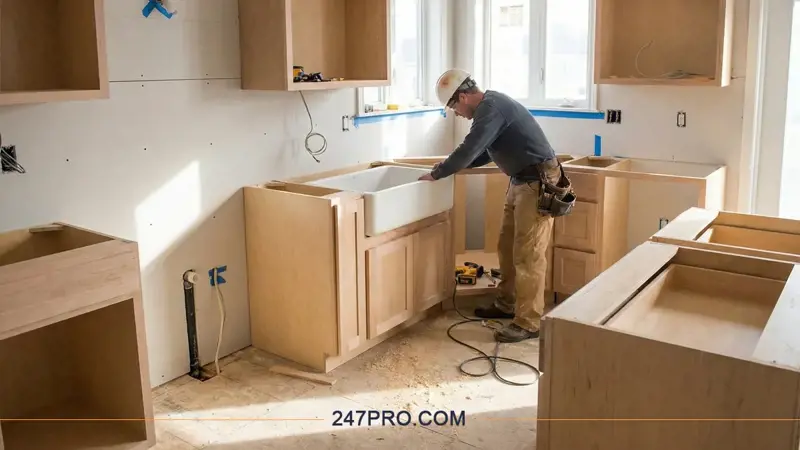
How to Organize Your Home Room by Room
Organizing your home room by room helps you create a clear, functional, and stress-free living space. Start with the areas you use most like the kitchen, living room, and bedroom,and work your way through secondary spaces such as bathrooms, laundry rooms, and storage.
Quick steps:
- Declutter each room: Remove items you don’t need or use.
- Assign a purpose: Every room should have a clear function.
- Use storage solutions: Shelves, bins, cabinets, and organizers.
- Label and categorize: Keep similar items together for easy access.
- Maintain regularly: Spend a few minutes daily or weekly to keep each room organized.
Which room in your home do you think will benefit the most from reorganization first, and why?
How to Build a House in Room Planner
Using a room planner is a smart way to visualize your home before construction, helping you make better decisions and avoid costly mistakes. It allows you to:
- Visualize the entire space: See how each room will look and feel before building.
- Optimize layout and flow: Ensure furniture placement, movement, and functionality are ideal.
- Plan for future changes: Easily test different designs or expansions without extra cost.
- Save time and money: Identify potential issues early, reducing construction delays and redesign costs.
Experiment with styles and finishes:Try different colors, materials, and furniture arrangements digitally.
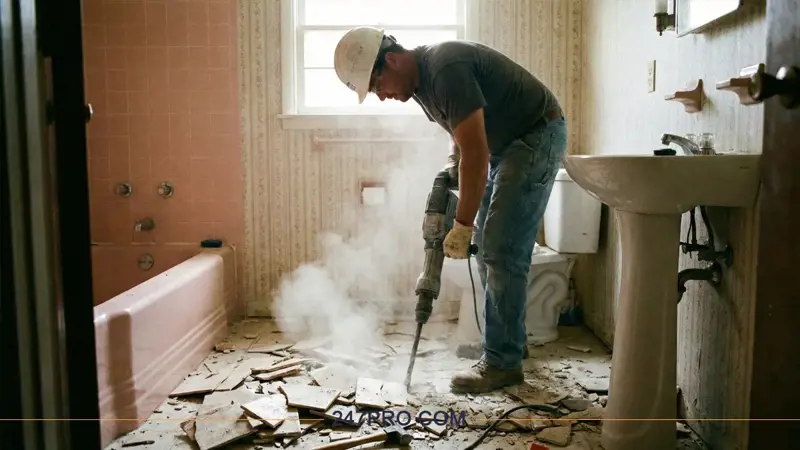
How to Renovate a House Room by Room Step by Step?
Renovating your home room by room helps you manage costs, reduce disruption, and improve each space efficiently. Here’s a practical step-by-step approach:
- Plan & prioritize: Identify which rooms need renovation first based on necessity, budget, and impact (kitchen, bathroom, or main living area).
- Set a budget per room: Allocate funds for labor, materials, and contingency (~10–15% extra).
- Prepare the space: Clear furniture, remove old fixtures, and protect floors and surfaces.
- Address structural & essential systems first: Fix plumbing, electrical, insulation, or any underlying issues before cosmetic work.
- Renovate walls, floors, and ceilings: Painting, drywall repair, flooring, and ceiling updates come next.
- Install fixtures & furniture: Cabinets, lighting, appliances, and essential furniture.
- Add finishing touches: Decor, storage solutions, and minor upgrades to complete the room.
- Review & move to the next room: Assess cost, quality, and functionality before starting the next space.
Which room would you renovate first in your house, and what’s the one change that would make the biggest impact?
Flooring Construction Cost
Flooring is one of the most noticeable parts of any home, and choosing the right flooring can dramatically affect both the look and the budget of your project. The cost depends on the type of material, size of the room, and labor required.Here is a breakdown of typical installed costs (materials and labor combined) for various popular flooring types
| Flooring Type | Average Installed Cost (Per Sq. Ft.) | Notes |
| Carpet | $4 – $7 | Budget-friendly option, good for bedrooms and noise dampening. |
| Laminate | $4 – $10 | Affordable, durable, good for moderate traffic areas. |
| Luxury Vinyl Plank (LVP) | $4 – $16 | Waterproof, versatile, a very popular mid-range option that mimics wood or stone. |
| Engineered Wood | $9 – $20 | Real wood veneer, more moisture-resistant than solid wood. |
| Ceramic/Porcelain Tile | $7 – $20+ | Highly durable and water-resistant, ideal for kitchens and bathrooms. |
| Solid Hardwood | $11 – $25 | Premium choice, adds significant home value, can be refinished multiple times. |
Why investing in good flooring matters:
- Increases home comfort and style
- Adds long-term value if you plan to sell
- Helps manage maintenance costs over time
If you had to pick one flooring type for your home right now, which would it be ?laminate, vinyl, or hardwood?and why?
Roofing Construction Cost
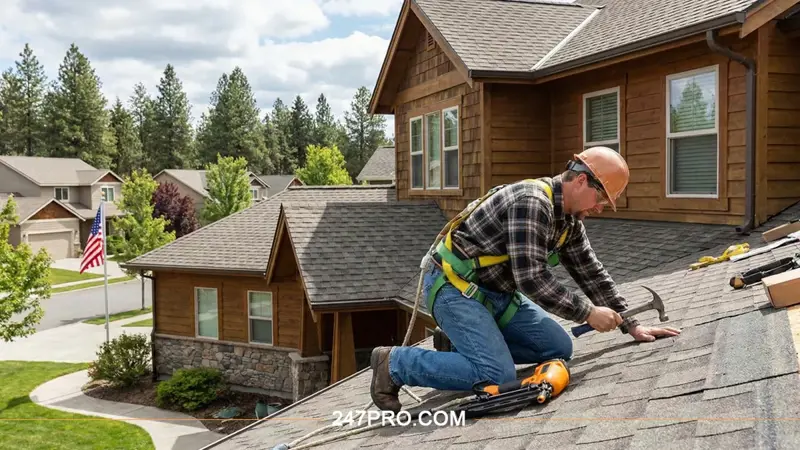
The roof is one of the most critical parts of a home;it protects everything inside and contributes significantly to the overall look and value of your property. Roofing costs vary depending on the material, roof size, and complexity of installation.
| Component/Material | Estimated Cost Range (approx. 2,000 sq ft roof surface) |
| Permits & Inspection Fees | $100 - $500 |
| Underlayment, Flashing, Vents | $1,000 - $3,000 |
| Asphalt Shingles (3-Tab/Architectural) | $6,000 - $15,000 |
| Alternative: Metal Roofing | $17,000 - $30,000 |
| Alternative: Tile/Slate Roofing | $20,000 - $60,000+ |
| Labor (Often included in material install cost) | ~$4,000 - $9,000 |
| Total Estimated Cost (Asphalt Shingles) | $11,100 - $18,500 |
Overview of Estimation Tools
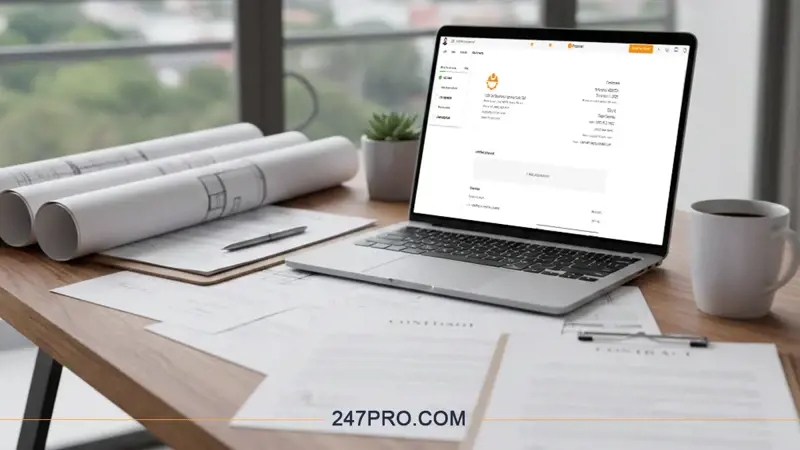
You can complete the residential building estimate process on your own or hire others to do it. In the DIY method, you can easily apply the rule of thumb and simple spreadsheets, such as Excel or Google Sheets, to estimate the price using the tips we mentioned, and then obtain bids from contractors. This might be a little overwhelming and time-consuming task, yet you will have control over the project.
There are simpler ways to estimate the cost of a building; you can take advantage of using an online estimator to get the exact cost of your project. In the following sections, we will guide you through using 247pro's online estimator.
- From your Construction Management dashboard, select 'Estimator' or use a construction work order software to track tasks, budgets, and timelines efficiently.
- After entering your zip code, you can start by selecting from over 20 pre-built templates that cover various construction and remodeling project scopes.
- The estimator will guide you through an easy step-by-step process to complete each scope of your project.
- It automates calculations for material lists, labor hours, and even project duration.
You can customize the estimation to meet specific needs. Once the estimate is complete, it automatically generates a professional proposal.
The Importance of Professional Help
Understanding how to estimate the cost of building a house is an essential part of managing your project financially; however, that doesn't mean you no longer need professional help with your project. Professionals, such as architects and various contractors, can assist you with any questions or problems you may encounter.
For larger and more complex builds, an estimator can help you with financial planning. However, combining your knowledge with expert guidance ensures that your dream home is built efficiently and within budget.
FAQ
What are the main stages of building a house?
Design and planning, obtaining permits, site preparation and foundation, framing and walls, roofing, electrical and plumbing systems, interior finishes, and landscaping.
Can you build a house room by room?
Yes. You can start with essential rooms like the kitchen and bathroom, then add other rooms gradually to manage your budget.
How can I estimate construction costs more accurately?
Use a room-by-room estimation approach, specialized construction software, and consult professional contractors for guidance.
What’s the largest factor affecting home construction costs?
Material and labor costs are the biggest contributors. Complex designs and larger square footage also increase expenses.
How much contingency budget should I set aside for unexpected expenses?
Typically 10–15% of your total construction budget.
Can I use online tools to estimate building costs?
Yes. Tools like construction work order software can provide accurate cost estimates, material lists, and project timelines.
How do I prioritize which rooms to build first?
Focus on essential rooms first, like the kitchen, bathroom, and primary bedroom, before moving on to secondary spaces.
What’s the average cost to build a kitchen?
For a mid-sized kitchen (around 150 sq ft), estimated costs range from $23,100 to $79,000 depending on materials and finishes.
How do I find a reliable contractor for my project?
Check experience, credentials, previous work, and reviews. Tools like Pro Finder can help you connect with trusted professionals.
How can I control costs when building a house?
Break the project into phases, assign budgets per room, track expenses regularly, and save non-essential finishes for later.